
我打造了一位 AI 共同創辦人,這是背後的原因。
我曾經不斷開發出沒人想要的 App。程式碼寫得沒問題——錯的是點子。所以我打造了一款工具,能像創投 (VC) 一樣,對創業點子進行壓力測試。
我打造了一個 AI 共同創辦人,這是我背後的原因。
開發軟體這 10 多年來,我啟動過無數專案、發布過許多產品,但也眼睜睜看著它們多數走向失敗。失敗的原因不是因為程式寫得爛,而是從一開始的點子就錯了。
這種模式總是不斷重演:對某個點子感到興奮、立刻動手開發、花了幾週(甚至幾個月)埋頭寫 code——最後才驚覺市場早就飽和了、根本沒有真實需求,或者別人早就做得比我更好。
AI 寫 code 工具的出現,反而讓情況變得更糟。當你能在一個週末就生出一個 MVP(最小可行產品)時,那種「跳過市場驗證、直接動手做」的誘惑實在太大了。既然都能直接做出原型了,誰還想做研究?
但殘酷的事實是:用最快的速度打造出錯誤的產品,它終究還是一個錯誤的產品。
我不斷踩到的坑
每次只要一有新點子,我就會陷入同樣的手動研究無限迴圈:
- Google 搜尋競爭對手,打開 30 個分頁,然後迷失在裡面
- 試圖從隨機的部落格文章和 Statista 的付費牆後估算市場規模
- 問朋友的意見,他們只會說「聽起來很酷」(毫無幫助)
- 最後放棄研究,直接打開編輯器開始寫 code
這個過程不僅緩慢、缺乏系統性,還充滿了偏見。我會下意識地「挑櫻桃」(cherry-pick),只看那些能支持我原本想法的數據。這就是最經典的創辦人陷阱。
我真正需要的,是一個能「毫無感情」地審視我的點子,並殘酷地告訴我真相的角色:現在有誰已經在做這個了、市場到底有多大、誰真的會掏錢買單,以及市場的缺口到底在哪裡。
說白了,我需要一個創投(VC)的大腦,但我不需要創投本人。
所以,我自己做了一個
一開始,我只是想寫個工具給自己用。起初沒什麼花俏的功能——就是一個系統,能接收一段粗略的點子描述,然後自動跑一遍結構化的市場研究。
它的核心是一個多智能體(multi-agent)AI 系統。你只需要用白話文描述你的創業點子,在幕後,各個專業的 AI Agent 就會開始分工合作:
- 競爭對手分析 (Competitor analysis) — 這個領域有誰、他們的收費標準是什麼、市場缺口在哪裡
- 市場規模估算 (Market sizing) — 用實際的方法論計算 TAM/SAM/SOM,而不是憑空捏造
- 客戶探索 (Customer discovery) — 誰會買單、他們的痛點是什麼、他們的購買決策過程為何
- 商業模式驗證 (Business model validation) — 單位經濟效益(unit economics)、定價策略、營收模式的契合度
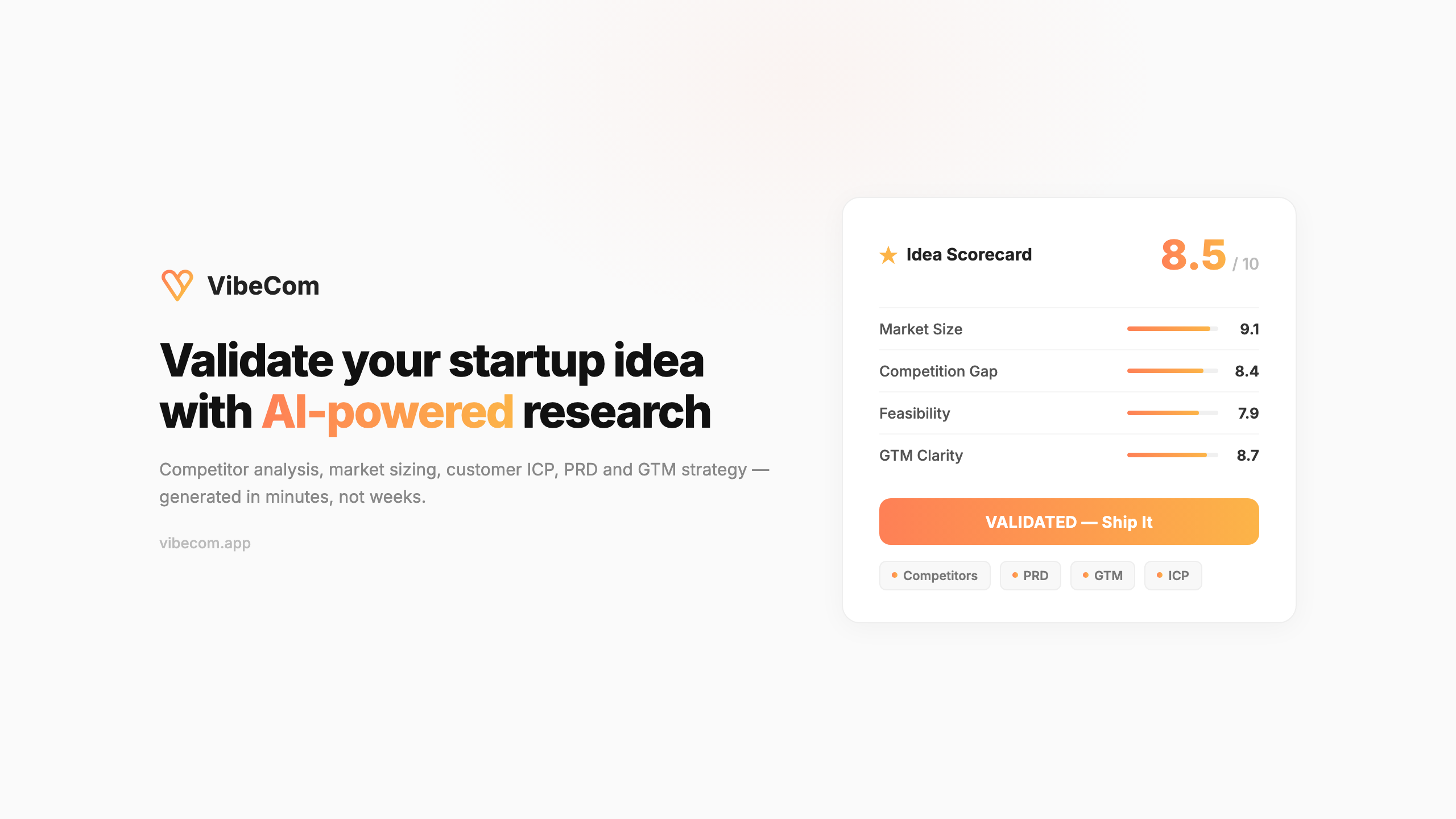
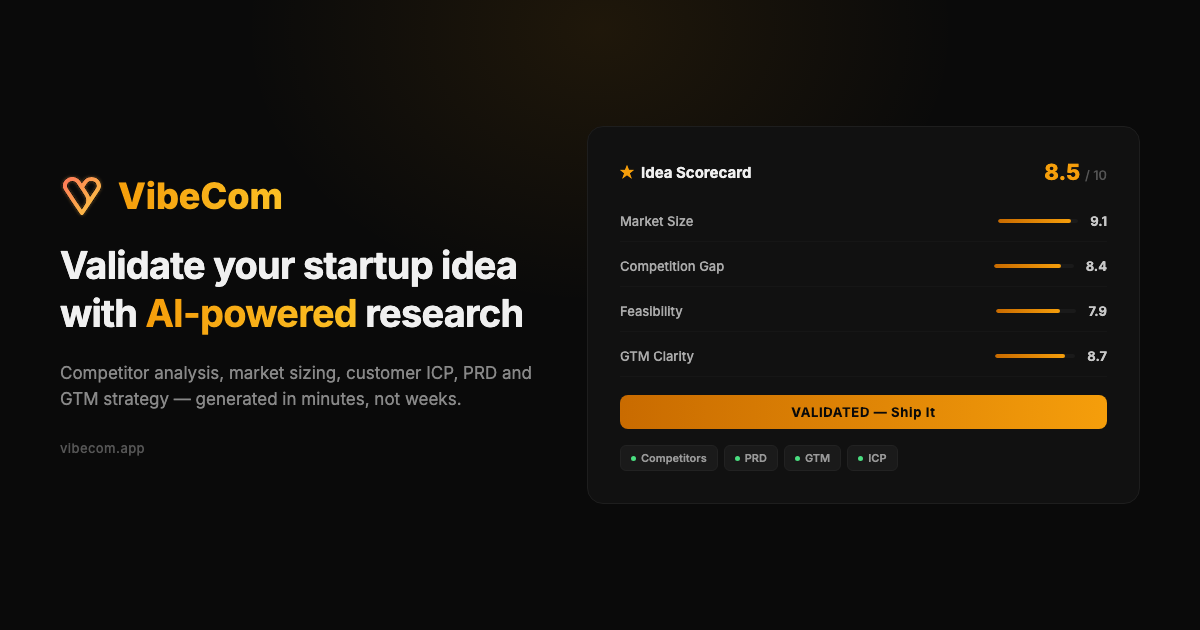
它會從 7 個維度對你的點子進行評分,並給你一份誠實(甚至有點殘酷)的成績單。你可以把它想像成從頂級投資人那裡獲得的回饋——差別在於,這只需要幾分鐘,而不是花上幾個月去應酬建立人脈。
為什麼我要分享這個
我把 VibeCom 拿給幾個創辦人朋友看。結果每個人都跑來跟我要使用權限。不是因為 UI 有多漂亮(老實說,一開始滿醜的),而是因為它產出的結果真的很有用。他們甚至開始根據這些分析結果來做真實的商業決策。
就在那時,我決定把它正式產品化。
VibeCom 現在已經正式上線:vibecom.app。
你可以免費開始使用。Pro 和 Growth 方案則能解鎖更深度的市場研究,包含更多的搜尋次數與更詳盡的分析報告。
如果你也是個滿腦子點子的開發者,正在猶豫接下來幾個月該把時間押注在哪個專案上——這絕對是我當年剛創業時,最希望能擁有的工具。
下一步
我堅持公開開發(Building in Public),所以接下來你可以期待我分享這些主題:
- 多智能體(multi-agent)架構,以及我如何處理工具的編排與調度
- 讓 AI Agent 產出可靠研究報告的 Prompt Engineering(提示詞工程)實戰經驗
- 成長駭客實驗,以及在產品分發上哪些策略有效(或無效)
如果你試用了 VibeCom,我很想聽聽你的真實想法。還缺了什麼功能?哪裡做得不好?要做到什麼程度,才會讓你在啟動下一個專案前,真正願意依賴它?
聰明地開發。動手前,先驗證。
分享
作者 Feng Liu
shenjian8628@gmail.com